Bartender Tony Conigliaro, 69 Colebrooke Row, The Zetter Townhouse, Islington, London, United Kingdom, UK, Clerkenwell, East London, Where to drink, Where to eat, Where to shop, Antiques, Bottle Aged cocktails, Creative Cocktails, Where to drink, London, New Orleans, LA, Louisiana, New York, NY, NYC, New York City, Brooklyn, Porland, OR, Oregon, Paris, France, Berlin Germany, Cocktail Tools, Liquors, Spirits, Gin, Vodka, Rye, Whiskey, Whisky, Scotch, Vermouth, Manhattan, Milkshakes, Best Bartenders
Bartender Tony Conigliaro - Find. Eat. Drink.
















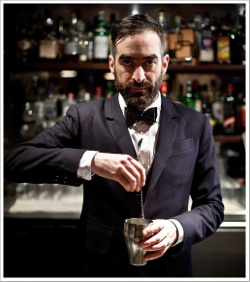
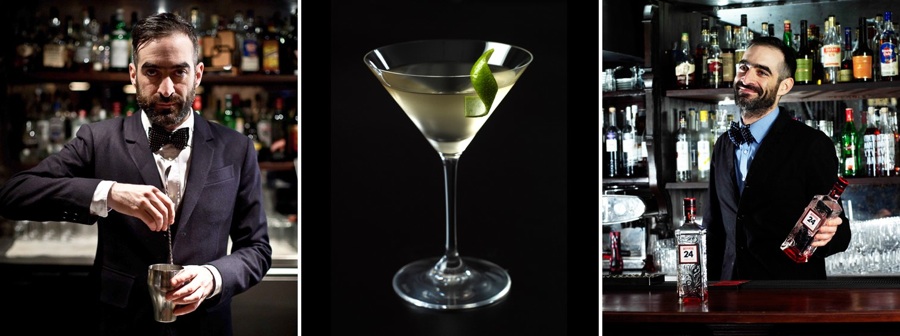
Q & A with Bartender Tony Conigliaro

Q. Tell us about the cocktail programs at The Zetter Townhouse and 69 Colebrooke Row.
A. There is a great emphasis on creativity in what we do, but it’s kind of schizophrenic. The Zetter Townhouse is very compact and minimal in style -- drinks with two ingredients, for example. Whereas at 69 Colebrook Row, it’s more of a showcase for ideas.
Even in the style of venues contrast. The Zetter Townhouse is full of antiques and hustle bustle -- which makes the drinks shine. At 69 Colebrooke Row, the space is very minimal, 1950s film noir almost -- so the drinks are allowed to be more elaborate. The drinks at 69 Colebrook Row would be a little too much at the Zetter Townhouse.
The Drink Factory is our lab. We have a lab technician who is in charge of all research and development of all the bespoke products: distillations, syrups, etc. I’ll have an idea and we’ll bounce it around. People will then go off and do various bits of research and we’ll get back together to discuss where it’s going and then tasting, tasting, tasting. Anyone who walks through the door is tasted on whatever we’re working on.
Q. How different are the cocktail scenes in London versus New York?
A. There is definitely overlap between the two.
London
London is so close to Europe and the amount of traffic we get is very European. There is a Continental style of drinking, we tend to see a lot more drinks like spritzers and Bellinis or wine-based drinks.
New York
From an outsiders point of view -- and I’ve known the New York cocktail scene for quite a time -- it’s interesting how it is spreading out more in the styles of cocktail. There was a period where it was very classical. Now you are starting to see the fun side of drinks, very inventive drinks with new flavors being integrated. In New York, there are lot more spirits-based drinks.
Q. What’s next in the cocktail world?
A. I’m not really one for predictions, but what we are trying to do is breakdown the snobbery of a cocktail. We are really interested in milkshakes -- non-alcoholic milkshakes. I also think carbonation will be a big thing.
Milkshakes
They are just really fun. They are basically fats and water, which is a completely different way of carrying flavor than alcohol.
There was a milkshake we did which was with mallow root, which they used to make marshmallows from. It was mallow, vanilla, syrup, put into a canister with milk and a bit of cream. I just couldn’t drink enough of it -- bold flavors, the mallow was round and a beautiful flavor and the vanilla went on forever.
Q. So you are going to open a milkshake bar?
A. No... although we are probably going to add them to the menu. There is so much focus on the cocktail, but not other drinks. I have a friend who doesn’t drink and he just sits there and has apple juice. We go out and I’ll have a beautifully crafted drink, whether it’s a cocktail or glass or wine, and he’s stuck with a second rate apple juice. Why not do something really great for people who don’t drink, for whatever reason.
Q. You have non-alcoholic drinks at The Zetter Townhouse or 69 Colebrooke Row?
A. We have a selection and one of the favorites is a very simple sherbet. When you get the oils out of the skin and crush it into the sugar -- it just pops -- fizzy and beautiful. We alternate them through the citruses.
Q. What do you think of aged cocktails?
A. There are two schools of aged cocktails: aged in a bottle and aged in a barrel. Aged in a bottle takes a lot longer, but in my opinion the results are fantastic, like aging wine. The longest you can age in a barrel is 3 months and my issue with that was ‘why am I adding wood to wood?’ I don’t need that. What I need is for the flavors to smooth out -- the idea is to have the flavors became smoother and more beautiful, like an aged port after 10 years. So I’m very much in favor of bottle aging.
Q. Tell us more about your bottle aging program.
A. The first batches we found didn’t work after 6 months. We then raised the alcohol volume by using Rittenhouse 100 instead of the original bourbon we had used. The Rittenhouse ages better and we got really good results after 6 months.
At any one time at the bar at 69 Colebrooke Row, we have a 1 or 2 year old and then a random age selection, from 3 to 8 years. The original batch will be the 9 year this year. We release one a year and I have eleven left and I want to go to 20 years. Each consecutive year, we have put down more and more -- anywhere from 48 to 96 bottles. So it’s quite an expensive endeavor.
COCKTAIL ADVICE & TIPS

Infusing Liquor At Home
We use lots of infusion techniques. It’s just looking at how those techniques will work best for the product you are using. For example, if you were to do a raspberry gin and you leave the raspberries in the gin, it will ultimately go off.
Here’s how to do it at home:
1. Put the gin and raspberries in a ziplock back, get as much air out as possible.
2. Cook it in a big pan and don’t let the temperature go above 52 degrees C.
3. Cook it for 20 minutes.
4. Then chill it and filter the result.
You are basically using the sous-vide method, which we translated to make it work with alcohol. You get this beautiful, raspberry-flavored gin.
You can also make a beautiful rhubarb gin for rhubarb gin and tonics. Really simple and great fun. It’s got a beautiful color as well.
BOTTLE AGING COCKTAILS
1. Use a bottle with a screw cap.
2. Don’t use water -- mix just the ingredients without dilution [don’t mix with ice].
3. Leave an inch or so of air at the top.
-
4.Seal the bottle really well and leave it standing somewhere dark with a consistent temperature all the year round -- a cellar is ideal.
SMOKING COCKTAILS
Smoke guns are huge fun. We’ve enjoyed burning tea with the smoke guns. Things like Lapsang Souchong are fantastic. We pre-mix a series of flavors, but we wanted to smoke them, so we put the tube of the smoker into the top of the glass and trap the smoke with cling film and let it sit to absorb the smoke into the drink. We used 1/2 gram of tea and smoked it for about two minutes. And we used gin and vermouth as the base.
It was just an experiment and we are constantly doing stuff like that. We build up flavor connections and libraries and if we don’t use them immediately, we’ll remember and go back to them to make things work to bridge it all together. We are mucking around all the time.
www.cuisinetechnology.com | Buy
Bartender’s Recs

Find | Cocktail Tools
Cocktail Kingdom
They are great. Greg’s [Boehm] business partner is an old friend and he runs Cocktail Kingdom UK and to be honest there isn’t really that much that those guys don’t really nail -- from the books to the bar equipment.
I’m not really someone who cares about a silver plated bar spoon or whether the spoon stirs to the right -- a bar spoon is a bar spoon. I’m a little old school like that -- does it do the job? Will it break after 2 days? I think the focus is more on the flavors and getting the drink made rather than what we look like making the drink.
Does a gold plated shaker make the drink taste better? Silver maybe has an effect on things like sours, but gold no.
www.cocktailkingdom.com | www.cocktailkingdom.co.uk
Find | Antique Liquors
Old Spirits Company
One of our big regulars is Edgar Harden, who is an antiques dealer and his company is called Old Spirits Company. He finds lots of old booze. He’s been finding some of the most incredible stuff that we’ve never had, like Schweppes Orange Tonic and things like that from the 1920s. He literally turns up with a box of things and says I’ve got this from the 1930s and that from the 1940s.
At the moment we’ve got Campari from the 1940s through to the present day -- we haven’t opened them yet. We are going to do a collector’s tasting one day with all of them to see what the difference is. There’s the change in recipe and the aging in the bottle.
We were given a bottle of 1930s Dubonnet and that was the spark for us bottle aging cocktails.
Find | Classic Spirits
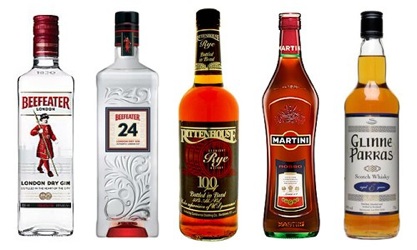
It’s just incredible what we have access to now. I think we are almost a little too spoiled for choice. You can have a 100 different gins, but half of them you can’t drink or don’t work in cocktails.
Gin | Beefeater & Beefeater 24
The difference between Beefeater & Beefeater 24 is a green tea note and grapefruit. Beefeater 24 is the only modern gin that I really like, apart from maybe some of the smaller boutique gins, like Sacred or Sipsmith.
We’ve use the Beefeater 24 in a series of Gimlets for both venues. At 69 Colebrooke Row, we made a rhubarb cordial. It’s literally Beefeater 24, rhubarb cordial, with a grapefruit twist and that’s it. It’s a very particular kind of profile. At the Zetter Townhouse, we did a nettle cordial. We dehydrated nettles and it was almost a like a tea when we made the cordial. It’s gin and the nettle cordial with a lemon twist on top.
The Gin Martini
I love the gin martini because you can have all these different cocktails at a bar, but with the gin martini, there is nowhere to hide. You either make that drink right or you don’t. With other cocktails you have a little more leeway on each side. I always go for Beefeater or Beefeater 24. We do a 5:1 martini with Beefeater and Martini Dry, but what we do is put a distillation tannins and polyphenols. We crush grape seeds and distill it to create an odorless and flavorless tincture. We add 100 microns of that to a bottle of vermouth and that makes it slightly drier on the tongue -- almost a tea-like dryness. For garnish, I always have olives.
Whiskey | Rittenhouse 100 Rye
I tend to go for things like Rittenhouse, because I just love the way that works. It just makes the most fantastic Manhattans.
Manhattan
Rittenhouse 100, Martini Rosso, 2 dashes of Angostura and garnish with a cherry, the macerated ones. I like Martini Rosso because I think some of the vermouths are either too powerful or too weak and the Martini Rosso sits well with the Rittenhouse. We kind of left the Manhattan alone after making the bottled vintage versions.
Whisky | Glinne Parras Scotch
We have a strange and obscure one -- Glinne Parras 5 Year Old. Hardly anybody knows it, but it’s just one we found once that is the most amazing kind of cocktail whisky. In essence, I make a Whisky Sours with it -- but we use a licorice syrup and it works in a topsy-turvy way, because the licorice doesn't hit you first; it just warms the drink up and stretches out towards the end with a beautiful effect. A lot of people say they don’t like licorice, but they really love that drink.
Find | Bitters
Q. Is there a point when there’s a saturation of bitters in the market?
A. Yes, but I also see it in a positive way. The idea that young and old bartenders are making 50 bitters means that they are thinking about something and it’s expanding what we do. Whether in ten years time we’ll all be doing that is a different matter. At the end of the day, the wheat will be separated from the chaff and we’ll have some amazing products and methodologies that we’ll have picked up.
Favorite Bitters | Angostura
It’s a classic.
www.angosturabitters.com | Buy It
London

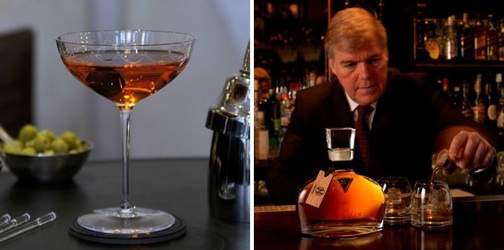
Cocktails at The Connaught Bar | Bartender Brian Silva
Photographs courtesy of The Connaught Bar | Rules
Drink | Classic Cocktails
Bartender Brian Silva | Balthazar London
I always like going to see Brian Silva, he’s great.
4-6 Russell Street, London WC2B 5HZ, United Kingdom
T: +44.(0)20.3301.1155 | balthazarlondon.com
Bartender Ago (Agostino) Perrone | The Connaught
Ago Perrone a great one for the classics.
16 Carlos Place, Mayfair, London W1K 2AL, United Kingdom
T: +44/(0)20.7499.7070 | www.the-connaught.co.uk
Drink | Modern Cocktails
Bartender Paul Tvaroh | Lounge Bohemia
Paul Tvaroh does some fun stuff.
1e Great Eastern Street, London, EC2A 3EJ, United Kingdom
T: +44/(0)77.2070.7000 | www.loungebohemia.com
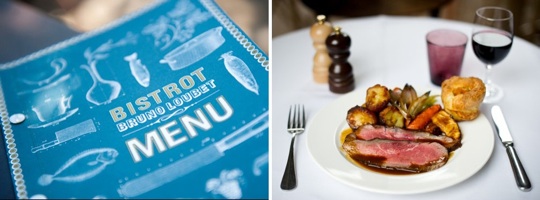
Bistro Bruno Loubet
Photographs courtesy of Bistro Bruno Loubet
Drink | Wine
Bistrot Bruno Loubet
It’s one of the restaurants that I go to regularly -- I really like it. They have a good wine selection.
86-88 Clerkenwell Road, London EC1M 5RJ, United Kingdom
T: +44/(0)20.7324.4455 | www.bistrotbrunoloubet.com
Barcelona
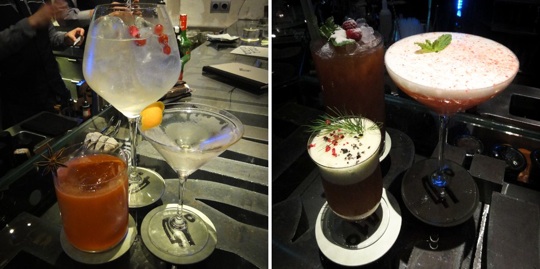
Cocktails at 41°
Photo Credit: Kent Wang [flickr]
Drink | Cocktails
Head Bartender Mark Safón | 41°
Mark, the head bartender, is brilliant. He makes some really interesting combinations. He makes a Pisco Sour with a little balsamic note to it -- it’s phenomenal.
Avinguda Parallel 164, 08015 Barcelona, Spain
Berlin
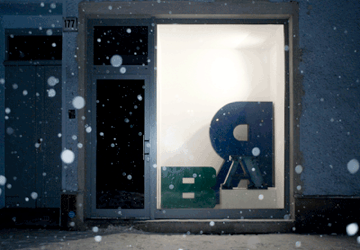
Buck & Breck
Photograph courtesy of Buck & Breck
Drink | Cocktails
Buck & Breck
Making some great classic twists, which I really enjoy.
Brunnenstrasse 177, 10119 Berlin, Germany
T: +49/(0)176.3231.5507 | www.buckandbreck.com
Paris
Drink | Cocktails
L'Entrée des Artistes
Probably the hottest cocktail bar in France, making some really nice stuff, reductions of pomegranate and things like that.
8, Rue de Crussol, 75011 Paris, France
T: +33/(0)9.50.99.67.11
New York
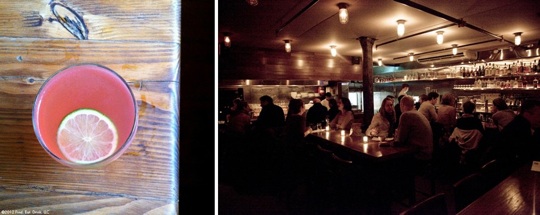
Cocktail at Dram | Booker & Dax
Photo Credit: Find. Eat. Drink. | Photograph courtesy of Booker & Dax
Drink | Cocktails
Milk & Honey
I love Milk & Honey -- Sam [Ross] and Mickey [McIlroy] are great.
134 Eldridge Street, New York, NY 10002 [CLOSED]
30 East 23rd Street, New York, NY 10010
Dave Arnold at Booker & Dax
Dave Arnold is doing amazing stuff. I think what he’s doing will change a lot of what happens behind bars, especially with the cold carbonation that he’s doing, it’s just phenomenal. His blog is amazing as well.
207 2nd Avenue, New York, NY 10003
T: 212.254.3500 | www.momofuku.com/restaurants/booker-and-dax
The King Cole Bar at The St. Regis Hotel
For old school cocktails.
2 East 55th Street, New York, 10022
T: 212.339.6721 | www.kingcolebar.com
Bartender Richard Boccato at Dutch Kills
Wherever Richard is working -- he’s brilliant.
27-24 Jackson Avenue, Long Island City, NY 11101
T: 718.383.2724 | www.dutchkillsbar.com
Dram
Dram down in Brooklyn -- there’s some really great stuff happening in Brooklyn.
177 South 4th Street, Brooklyn, NY 11211
T: 718.486.3726 | www.drambar.com
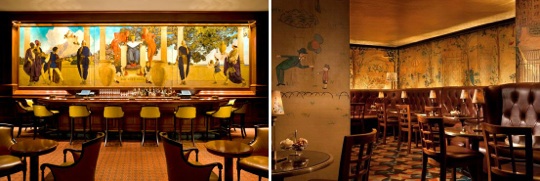
King Cole Bar at The St. Regis Hotel | Bemelmans Bar at The Carlyle Hotel
Photographs courtesy of The St. Regis Hotel | The Carlyle Hotel
Old School Cocktails In NYC
When the hurricane hit last year, I was stuck here with friends who hadn’t been to New York before and nothing was open. We had this brain wave that hotel bars had to be open. So we asked Dave Wondrich for a list of all the old school bars from the Carlyle as far down as you can go. Within 20 minutes we had a text back that included The Carlyle, the Plaza, the St. Regis and others.
Our Favorites | King Cole Car at The St. Regis & Bemelmans Bar at The Carlyle
I’ve got fond memories of those places -- I do love them -- all the old boys.
King Cole Bar
2 East 55th Street New York, 10022
T: 212.339.6721 | www.kingcolebar.com
Bemelmens Bar
35 East 76th Street New York, NY 10021
T: 212.744.1600 | www.rosewoodhotels.com/en/carlyle/dining/bemelmans_bar
Eat | Restaurants
Keen’s Steakhouse
I love it -- you can get an absurd chunk of meat.
72 West 36th Street, New York, NY 10018
T: 212.947.3636 | www.keens.com
Terakawa Ramen
A great noodle place we always go to that’s off 23rd Street -- it’s brilliant.
18 Lexington Avenue, New York, NY 10010
T: 212.777.2939 | www.terakawaramen.com
New Orleans

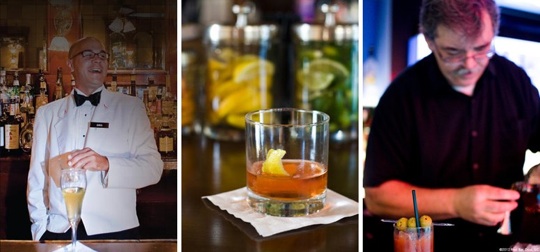
Bartender Chris Hannah at French 75 | A Sazerac at Cure | Bartender Chris Hannah at Bar UnCommon
Photographs courtesy of French 75 | Cure | Find. Eat. Drink.
Drink | Cocktails
Bartender Chris McMillian | Formerly at Bar UnCommon
I go wherever Chris is drinking. I usually go to Tales Of The Cocktail a few days early and hang out with him. We go to all the jazz clubs. And I get to have those bloody amazing mint juleps that he makes.
I was with him once and he was making a mint julep and there was someone harking on about Jack Daniels being so rubbish. He just made a mint julep with Jack Daniels. They drank it and said it was the most amazing mint julep they had tasted.
I have watched him and watched him and watched him and I don’t know how he bloody well does it. There is something he does.
He’s a wonderful, wonderful guy.
Bartender Chris Hannah | French 75
He is brilliant and I love him -- a very cool guy.
813 Bienville Avenue, New Orleans, LA 70112
T: 504.523.5433 | www.arnaudsrestaurant.com/french-75
Cure
The new school guys in New Orleans are doing well at Cure.
4905 Freret Street, New Orleans, LA 70115
T: 504.302.2357 | www.curenola.com
Find | Jazz Clubs
Maple Leaf Bar
Chris McMillian and his wife will pick us up and we’ll go to the Maple Leaf and those out of the way jazz clubs.
8316 Oak Street, New Orleans, LA 70118
T: 504.866.9359 | www.mapleleafbar.com
Portland

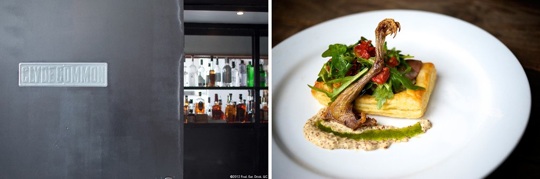
Clyde Common | Le Pigeon
Photo Credit: Find. Eat. Drink. | Photograph courtesy of Le Pigeon
Drink | Cocktails
Portland is just amazing, one of my favorites.
Jeffrey Morgenthaler | Clyde Common
You have to go and see Jeffrey -- it’s a great starting point.
1014 Southwest Stark Street, Portland, OR 97205
T: 503.228.3333 | www.clydecommon.com
Eat | Restaurants
Le Pigeon
The food is sublime -- a brilliant, brilliant chef. The foie gras profiteroles with chocolate is a dessert that knocked me sideways -- it was amazing.
738 East Burnside Street, Portland, OR 97214
T: 503.546.8796 | www.lepigeon.com
Cocktail Recipes

More Tony Conigliaro Recs

Download the F.E.D. iPhone app and get more of Tony Conigliaro’s recommendations, as well as more recs from other bartenders, chefs, sommeliers and food artisans.
Who
Bartender Tony Congiliaro is the man behind the cocktails at 69 Colebrooke Row and The Zetter Townhouse in London, UK.
Why
He has a creative lab called Drink Factory where he and his team let their minds drift into the unexpected; they distill, mix and develop bespoke products for the bars -- anything from re-distilling vodka and gin using toothpaste and rocks to syrups and milkshakes. He’s a little bit Willy Wonka stirred with a dash of Old School.
Bartender Tony Conigliaro | London, UK
August 2, 2012


69 Colebrooke Row - The Zetter Townhouse - The Drink Factory - London, UK
Photographs courtesy of Tony Conigliaro & 69 Colebrooke Row Hospitality
Article August 2012
General Information

Grain Store
Granary Square / King’s Cross
French / Cocktails
1-3 Stable Street
London N1C 4AB, United Kingdom
T: +44.(0)20.7324.4466
Website:
69 COLEBROOKE ROW
Islington
Cocktails
69 Colebrooke Row
London N1 8AA, United Kingdom
T: +44/(0)75.4052.8593
Website:
THE ZETTER TOWNHOUSE
Clerkenwell
Cocktails
49 - 50 St. John’s Square
London, EC1V 4JJ, United Kingdom
T: +44/(0)20.7324.4545
Website:
DRINK FACTORY
Website:
Bar Le Coq
10th Arrondissement
Cocktails
12 Rue du Château d'Eau
75010 Paris, France
T:+33.(0)1.42.40.85.68
Website:


Tweets


Share








Share

