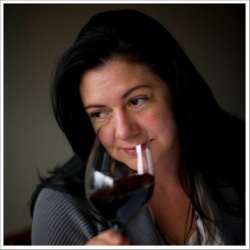
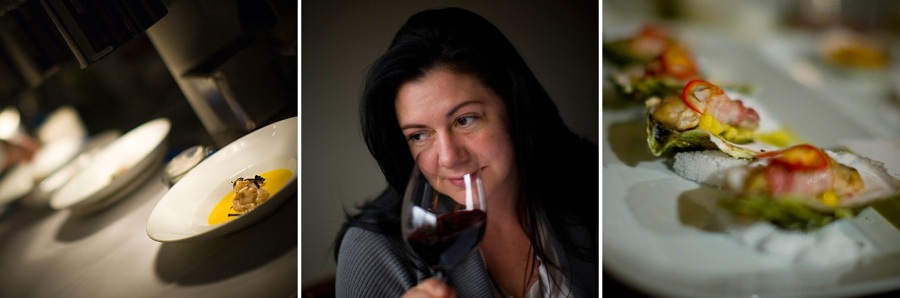
Cat Silirie, Wine Director, Barbara Lynch Gruppo, Boston, No. 9 Park, The Butcher Shop, B&G Oysters, Sportello, Menton, Natural Wine, Point of View, Wine List, How to pick wines on a wine list, wine education


BARBARA LYNCH GRUPPO - BOSTON, MA
Q & A WITH CAT SILIRIE

Q. How did you get into wine?
A. I always joke that Bacchus told me in a dream that wine is what I had to do.
The tricky part is that 20 years ago there wasn’t an institute where you could go to get certified. You had to apprentice, and like other trades, find a mentor. I was able to apprentice under the buyer and sommelier Michael Fahey at Grill 23, one of the classic steakhouses in Boston. When he left, I was made the buyer.
A lot of young people ask where do you start? I volunteered a lot of time in those days.
Q. You’ve worked with Barbara Lynch for many years. How have you influenced each other - wine and food wise?
A. We started working together about 15 years ago at Rocco’s, which is this Italian regional restaurant. But we were colleagues here in Boston over 20 years ago and we always wanted to work together. She was a cook at Olives and then the chef at Fig, and I was the buyer at Grill 23. We felt like teammates in the trade since, we were in our early twenties.
It’s hard to see how we’ve influenced each other, because at this point, we are sisters really. It’s a deep devotion to classic things. We both love Old World wine and food. Even with all the other distractions from New World wine on the market, we both just keep on wanting to go back to France and Italy, and now for me, Austria and Spain.
Q. Tell us about your wine training program, Wine Words.
A. I had this idea that if I took myself off the floor, the cult of personality, so to speak, and spent a lot of time training, especially waiters, bartenders, and managers, that we could have a team of sommeliers, if not certified ones, who knew about wine, how wine tasted, and could discuss wine.
It worked so well, that we now do it at all 7 of our places.
Q. Thoughts on organic / natural / bio-dynamic wines?
A. I don’t try to force the issue with my guests or my staff. It’s not that we know it is bio-dynamic, so it must be important. You have to feel something first either way.
There are restaurants now using different colored inks to indicate whether they are sustainable or in-transition or fully bio-dynamic or certified and it just gets too politically correct for me to be in a restaurant and be decoding a wine list according to how someone’s handling this movement.
Q. Do you tend to find that the wines you like are from the producers / growers who are doing the “right” things (farming sustainably, etc).
A. Yes, it happens often. Even going to a distributor tasting where it’s hundreds of different producers and I find I am moved by producers who are farming with that movement in mind. It makes sense that people who want to make expressive wine wouldn’t want to live a different way.
Q. In your mind, what makes a great wine list different from just an average wine list?
A. It’s definitely a sense of their point of view, a hand behind it. Let’s just say they have seven Lambruscos. Whoa, these people like Lambrusco! Then you look at the menu and they have all these great antipastis. It’s something signature. It could be 5 Txakoli or it could be a run on Raveneau. Something that shows there is a passion, rather than a ‘correct’ wine list.
You know you have a ‘correct’ wine list right away when you have a category that says ‘Other Interesting International Whites.’ Wine lists that feel like they have to have something for everybody and they don’t do anything with a full court press, just do a little here and a little there.
There are too many restaurant wine lists, especially probably in hotels or more general places, that the wine lists has something for everyone, and it just drives me nuts. Too many brand names they think they have to have, then they try to be creative in this little other category and it is just not working. I went in this wine bar recently, it was a corporate one, and they have a hundred wines by the glass. I asked the bartender how’s that going with that list, do you sell a lot of different things? He replied ‘nah we just order 5 cases of Rodney Strong Merlot every week.’ No training, no diversity, no passion.
Q. What is your favorite wine with oysters?
A. Favorite is wine from grapes that are grown on fossilized oyster shells: Chablis, Burgundy, anything from Kimmerridgian soil, like Sancerre. I do love the oysters with oysters motif. I also love Muscadet. Even though that is a different terroir, I love that equally. And when Barbara [Lynch] said she was going to create an oyster bar in Boston, I said ‘we can finally sell Muscadet.’ We always have at least 2 Muscadets by the glass and 5 different ones by the bottle.
Q. More people are writing about Muscadet now though, but fortunately, it is still a little bit of an undiscovered gem.
A. It is, which is great that it is still a value. I tell people it’s one of the great terroir wines of the world. Nothing else really tastes or looks like Muscadet. Especially people like Mark Olivier of Pepiere. If his wine doesn’t say it, I don’t know where else to look. It’s so wonderful. That’s a great archetype of Muscadet to compare other producers to.
I also love Guy Bossard [Domaine de l’Ecu]. His single terroir wines are so interesting: the Expression de Gneiss, the Expression de Orthogneiss, the Expression de Granite. They haven’t been on the market for a while though, because of the hail in 2007. But I love being with wine trade people or even wine snobs and pulling out a Muscadet, one of the great terroir wines of France, and they try Pepiere’s Clos de Briords and they understand what you are talking about.
That’s a passion of mine - terroir wine that isn’t necessarily Corton Charlemagne. There are discoveries of wines that are inimitable in their taste and their sense of place, but they don’t necessarily have to be the world’s rarest.
Q. What other undiscovered gems have you found?
A. Valtellina in Northern Italy and that expression of Nebbiolo. We have a new fine dining restaurant called Menton, and there is a section of the wine list called ‘Passion Pages.’ We set up the wine list to have little studies of a producer or a zone. So there is a whole passion page of Valtellina with wines from Nino Negre, Rainoldi, and Triacca.
Everyone loves Barolo and Barbaresco, and many diners that are coming for a fine dining situation might consider those wines first. But it is fun to take them to an Alpine version, where the wines are not as full bodied, but amazingly aromatic and really interesting. Those represent great values, which I think still taste of the Piedmont region with a taste of Nebbiolo.
Q. Most successful, but off the wall wine pairing? What would surprise most people?
A. One classic pairing was answered by both Joe Dressner and Levi Dalton, Comté with Savagnin from the Jura. Anytime anyone tastes Savagnin or Vin Jaune, they cannot imagine what would work, but it is amazing how well Comté does.
I have so many classic ones like oysters with Muscadet and foie Gras with Sauternes.
Q. Any non-classic ones?
A. We are certainly having a lot fun pairing food with orange wines. That’s our newest exploration. One of the great things we have learned is that they can act like white wine in the beginning at a cool temperature, just out of the cellar, with appetizers or fish. Then with a tasting menu or a progression of dishes, as they warm up more to room temperature, the phenolics and the richness of the wine work well and can stand up to animal protein. So we’ve been joking that they are really two wines in one that can act as your aperitif and then act as your red wine.
Q. What standout orange wines you are drinking at the moment?
A. I’m in love with COS Pithos, it’s a Sicilian Grecanico fermented in anfora, from a producer that I love in Southern Sicily.
We are having a lot of fun with those crazy nuns. Cistercensi wines from Coenobium that Rosenthal Imports. They have the second bottling now, the Rusticum, which is really fun. It’s doing very well at the Butcher Shop with cheese plates and charcuterie. That wine is really interesting.
There is a beautiful sweet version of orange wine from Muscat in Sardinia called Moscadeddu in the Sardinian dialect (which we all just love saying) from Dettori. It was imported by Vias, but they aren’t working with them anymore, so we are in a panic, because we need these wines, they are wonderful. They have a Vermentino done with open fermentation with indigenous yeast and the Moscadeddu. The Moscadeddu is amazing with different desserts. It is as scented as an orange blossom and a white lily, but it also has caramel and burnt orange tones and goes with all different things.
Q. Thoughts on rose? Any favorites?
A. I love them. It’s been really fun watching it get so accepted and turned around in terms of perception and enjoyment. I like to paint the seasons and really ritualize rose through the good weather months. In the dead of winter, we might not have very many at all on the wine list. But in spring, all of a sudden doing a little celebration, especially with the more delicate Provence roses, like Tempier and Commanderie de Peyrassol.
We are starting to work with Italian roses with a little bit more phenolics, color and tannins like Ciliegiolo from Bisson, which is super interesting.
Q. How do you create the wine lists for your restaurants?
A. The minute you look at the place with the slate bar and the wooden floor with meats and sausages hanging around, you kind of know what kind of wine list it should be.
Barbara [Lynch] creates these wonderful environments that basically already describe the type of wine list that should be in order. The Butcher Shop is definitely artisanal, handmade, old European reds for the most part and whites. Oyster Bar is perfect for rose and Muscadet. We have an Italian restaurant, it kind of looks like an American diner, but it’s called Sportello with really great authentic foods and we have all Italian wines, but all different regions and small growers. So that part of working with Barbara is really fun, how she creates these environments and the foods.
Recommendations

Q. What wine do you keep at home as your go-to wine?
A. Manzanilla Sherry - always a half bottle of Hildago Gitana Manzanilla - it’s unbelievably energizing and fresh. It’s as vibrant and appetizing as champagne really. I like the armchair travel to the ocean with the salty tang. It’s such a quick little party with some olives, Marcona almonds, and anchovies. It’s such a value.
Sherry is another passion of mine. There is always sherry in the fridge, but especially Manzanilla. I’m working at The Butcher Shop to have more and more of them and keep them at the right temperature and have the right food. They are so fascinating and a great value, but just not chic right now.
It takes so much proper storage in a restaurant to do it right. The idea is that you want to banish the old days of every hotel back bar having bottles that have been open for six years with half fills and kept warm. It’s a disaster.
We have an eight bottle temperature control unit for the bar for just sherry and we date them so that a Manzanilla is not open for more than three or four days. You have to be really vigilant.
Q. Favorite pre-dinner drink/aperitif?
A. Always bubbles, but especially champagne. It is almost always champagne rather than prosecco or cava.
There is an exciting go-to that’s so reasonable from the Jura from Stephane Tissot - his gorgeous Cremant de Jura. Both the rose, which is a rose of poulsard and pinot noir, and the white. Both under $20 wholesale, which is incredibly reasonable, and they are stunning. They have jurassic minerals from the Jura.
But everyone who knows me would say that I couldn’t answer this question without mentioning Pierre Peters, which I basically live on.
Q. Favorite after dinner/digestif?
A. I’ve never really fallen for spirits, but I have fallen hard for mezcal this year. The Del Marguey single village mezcals. They definitely have the taste of place that we all love so much in wine. There are single villages from different distilleries - the same agave with a different thumb print of flavors because of the village. I’ve never really seen it in a distiller, except for maybe a single malt scotch.
After dinner, I do love cheese with sweet wine and I love the sweet wines of Alois Kracher of Austria. He and his son came up with the idea of little minis, they are little nips. They designed the glass and the screw cap so you can always have a couple of unoxidized nips of TBA. They had noticed in their restaurant travels around the world that all of us, including me, serve their TBA by the glass, and it is very expensive to have a bottle open. They noticed that it would tend to be open too long, so they came up with a non-vintage blended house style that they put in these nips and it is reasonable, but still TBA from a great producer.
With Kracher TBA, I do love the fully ripened Delice de Bourgogne or Pierre-Robert. I love the gooey, creamy cows milk cheeses. But they are also good with blue cheeses, like Humbold Fog.
Q. Which wine producers inspire you?
A. Along with COS in Sicily, I am so amazed by Terre Nerre, Marco and Iano de Grazia’s fraternal property on the side of Mount Etna in Sicily. They make unbelievably exciting wines. They are not even in their 10th vintage. They found these pre-phylloxera sites of Nerello Mascalese right on the side of the mountain and are vinified into these gorgeous wines with Burgundy-like tone and weight with Sicilian volcano-like terroir.
There is a rose from Cotat that is on our wine lists year round. It is a rose of Pinot Noir from Chavignol in the Loire that I consider meditation rose for the entire year.
I do love just falling for a producer and continuing to study them through the vintages and different wines from them.
Q. Favorite restaurants for their wine lists?
A. I would never go to New York without visiting Terroir. I just thought that was one of my favorite wine lists ever, the graphics Paul Grieco does with Steven Solomon. Talk about an opinionated wine list. He would be a good textbook example of a wine list with a point of view.
And a similar idea in San Francisco, I could never go to San Francisco without going to The Slanted Door. I love the way the food and the wine there combine. You are right at the heart of wine country and there is no California wine on the list; only Austria, Germany, Loire Valley, and Champagne. The wine is unbelievable with those Vietnamese flavors.
Q. Any California or New World wines you really like?
A. I deeply believe in Bob Linquist of Qupe and Jim Clendenen of Au Bon Climat. I think their wines have intensity and elegance.
I am getting very interested in the Sonoma Coast and am very interested in David Hirsch. He’s a really interesting character. I’ve just learned so much about farming and viticulture because that is what he’s been doing there for 30 years on the Sonoma Coast.
We also just made a deep friendship with a winery that I have respected for a long time and am now just getting to know, Araujo’s Eisele Vineyard in Napa, in Calistoga. They are fascinating and really have quite a vision. The first part of their vision is the inherited knowledge of what that land is like after generations. They have known since the turn of the century that it is was a great Cabernet vineyard. They are farming bio-dynamically now which is kind of a surprise, because they don’t really talk about it or use it in any way as a marketing approach.
Q. Other favorite restaurants around the world?
A. In Vienna, Austria, Wieninger Heuriger. It’s a very traditional heuriger (tavern) that’s been run by the Wieninger family for more than three generations. They have vineyards right in Vienna. There’s this amazing vineyard that’s a hill called the Neusberg, that is still all planted vines and the winery is underneath the restaurant. It is buffet style, but it is the best Wiener Schnitzel and traditional Austrian food, casks of Gruner Veltliner right on the bar, with a beautiful outdoor terrace. It is just a great place. We don’t have anything like it in the US. All three generations were there one night when I was there, doing something different, running food, pouring wine. I love that place.
In London, there is a place I love so much that is just so stylish called Les Trois Garcons. The decor is perfect, fun, English camp. There is a lot of taxidermy wearing tiaras and they have antique handbags all strung from the ceiling. The food is delicious and quite elegant.
Around the corner they have a place called the Lounge Lizard that is filled with sixties vintage furniture and it’s fun to drink champagne there.
Q. Favorite restaurants in Boston?
A. There is an amazing restaurant called Oleana. Ana Sortun, who is the chef/owner, grew up in Seattle, Washington, but somehow fell in love with Turkish, Moroccan and Greek cuisine and spicing. She is amazing at, not necessarily doing a fusion, but combining spices from the ancient Mediterranean. Her husband, Farmer Chris, is a small farmer in Sudbury, Massachusetts, and grows all the vegetables for the restaurant and they are always unusually seasoned and spiced. It is so inventive, but so natural and good. And you feel so good eating there. Her wine director, who is Hawaiian, Teresa Paopao, has been with her for years. It is gorgeous food. It is where we all want to go.
Q. Favorite wine stores?
A. There is one in Boston that I really do love, the Wine Bottega, owned by Karie Platt. It’s in the North End, and shares a passion, an editorial, and a point of view. It’s mostly Italian, but they don’t limit themselves, there’s French, American, and Austrian. It is one of those small, but super personal stores. Everyone that works there is so passionate. They do the buying together as a group. I really like her mentorship with her team, because you can talk to anybody and they have all tasted the wine. They do the hand-written card thing. It is the kind of super personal wine store that I like.
Terroir in San Francisco: It is really all natural wine, part of the movement, run by two French characters, who definitely have a very French aspect to their service.
Q. Who else in your business do you think deserves more praise?
A. In Boston, Taberna De Haro is one of my favorites. It has very traditional cooking, really authentic Spanish cuisine. Deborah Hansen is the chef/owner and also the wine buyer. She was studying Spanish literature in Madrid and married a man from there. They came back and started the restaurant.
It is the best Spanish wine list I have seen in this country. It has almost 250 all-Spanish wines and Deborah writes all the descriptions for the wines. She is really unbelievable. She does all the cooking and hosting. It is this little family style taberna (tavern) in Brookline, just over the Boston line, with traditional food and unbelievable quality.
She makes a paella with squid ink, so it’s all black - we all call it the black rice dish - it’s amazing with Priorat or Rioja. She has great Spanish cheese and amazing oil. I’ve never seen a Spanish wine list like this anywhere, even in Madrid. She has every sherry, txakoli, red txakoli, it’s a really good place.
Q. Favorite markets in Boston and around the world you don’t want to miss when you travel?
A. La Boqueria in Barcelona, Spain, which I dream about. I love sitting in the stalls in the bars in the back, which are wonderful.
Any farmers market in California: Santa Barbara and Santa Monica. The Santa Monica market is right in a neighborhood where you can imagine how healthy life must seem with the ocean right there and everybody’s out buying all these amazing vegetables in January. It is one of my favorite parts of my California trips when I go in January or February.
WHO
Wine Director/Wine Buyer for Barbara Lynch Gruppo in Boston which includes restaurants: No. 9 Park, Butcher Shop, B&G Oysters, Sportello, Menton.
WHY
She creates wine lists with a point of view, believes strongly in educating her team, and can never say no to bubbles.

CAT SILIRIE - WINE DIRECTOR
August 4, 2010
RECOMMENDED BY
Alto Wine Director Levi Dalton
RECOMMENDATIONS
Cat Silirie’s recommendations on which wines to drink and where to eat, drink, and shop in Boston, New York, San Francisco, Vienna, and London.

NO. 9 PARK
Italian / French
Beacon Hill
9 Park Street
Boston, MA02108 (view map)
T: 617.742.9991 (make a reservation)
Website:
Hours:
Mon - Sat: 5:30pm - 11pm
B&G OYSTERS
Seafood
South End
550 Tremont Street
Boston, MA 02118 (view map)
T: 617.423.0550 (make a reservation)
Website:
Hours:
Mon: 11:30am - 10pm
Tue - Fri: 11:30am - 11pm
Sat: 12pm - 11pm
Sun: 12pm - 10pm
Wine Bar / Butcher Shop
South End
552 Tremont Street
Boston, MA 02118 (view map)
T: 617.423.4800
Website:
Hours:
Wine Bar
Sun - Mon: 11am - 11pm
Tue - Sat: 11am - 12pm
Butcher Shop
Sun: 11am - 5pm
Mon - Sat: 11am - 8pm
SPORTELLO
Italian
Fort Point Channel
348 Congress Street
Boston, MA 02110 (view map)
T: 617.737.1234 (make a reservation)
Website:
Hours:
Lunch
Mon - Fri: 11:30am - 4:30pm
Dinner
Sun - Thu: 4:30pm - 10pm
Fri - Sat: 4:30pm - 11pm
Brunch
Sat - Sun: 10:30am - 4:30pm
Bakery / Retail
Mon - Fri: 7am - 7pm
Sat - Sun: 10:30am - 7pm
MENTON
French
Fort Point Channel
354 Congress Street
Boston, MA 02110 (view map)
T: 617.737.0099 (make a reservation)
Website:

Hours:
Sun - Thu: 5:30pm - 9:45pm
Fri - Sat: 4:30pm - 10pm
Photograph by Justin Ide
Cat Silirie’s recommendations on which wines to drink and where to eat, drink, and shop in Boston, New York, San Francisco, Vienna, and London.
RECOMMENDATIONS